Where our water supply comes from
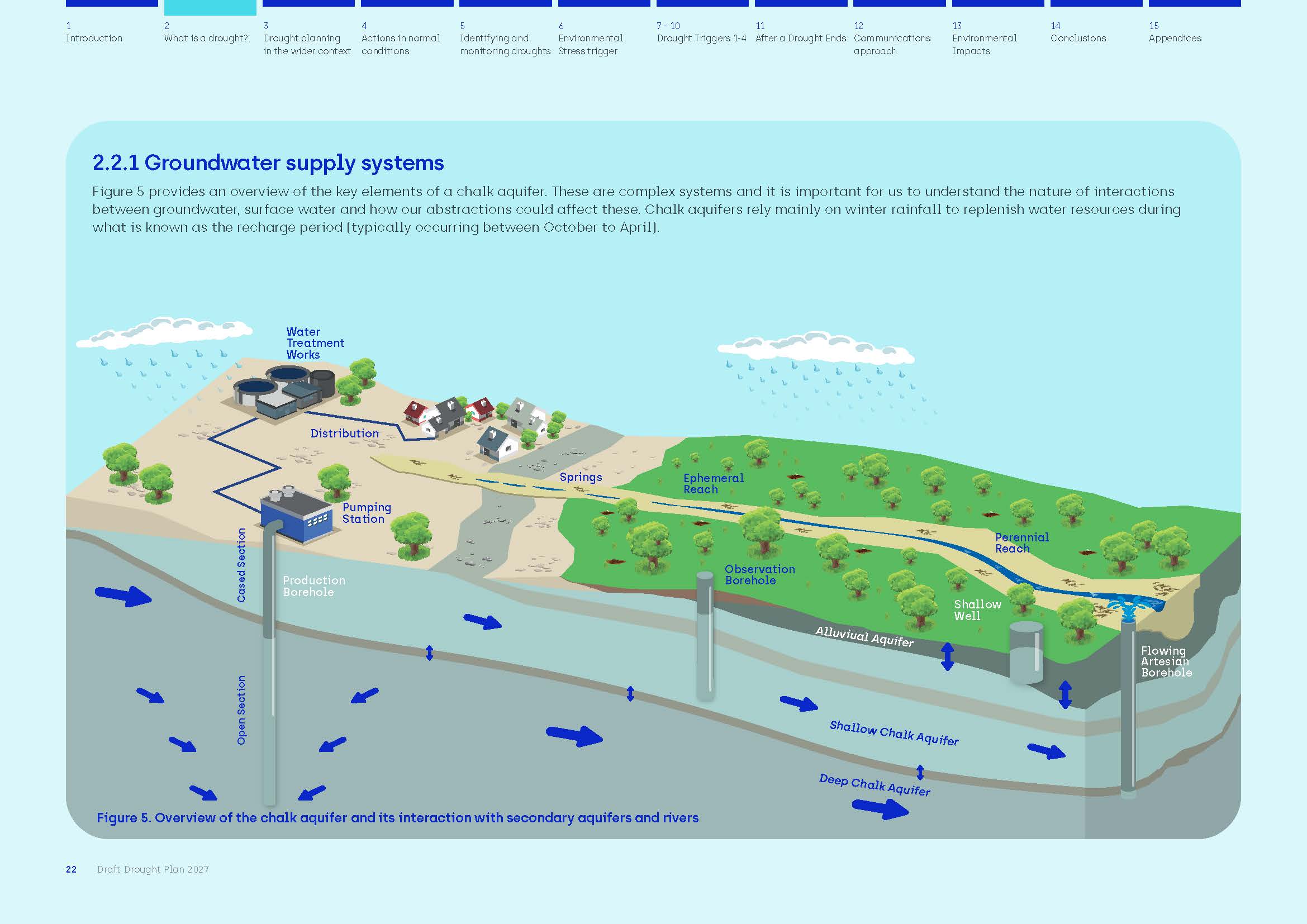
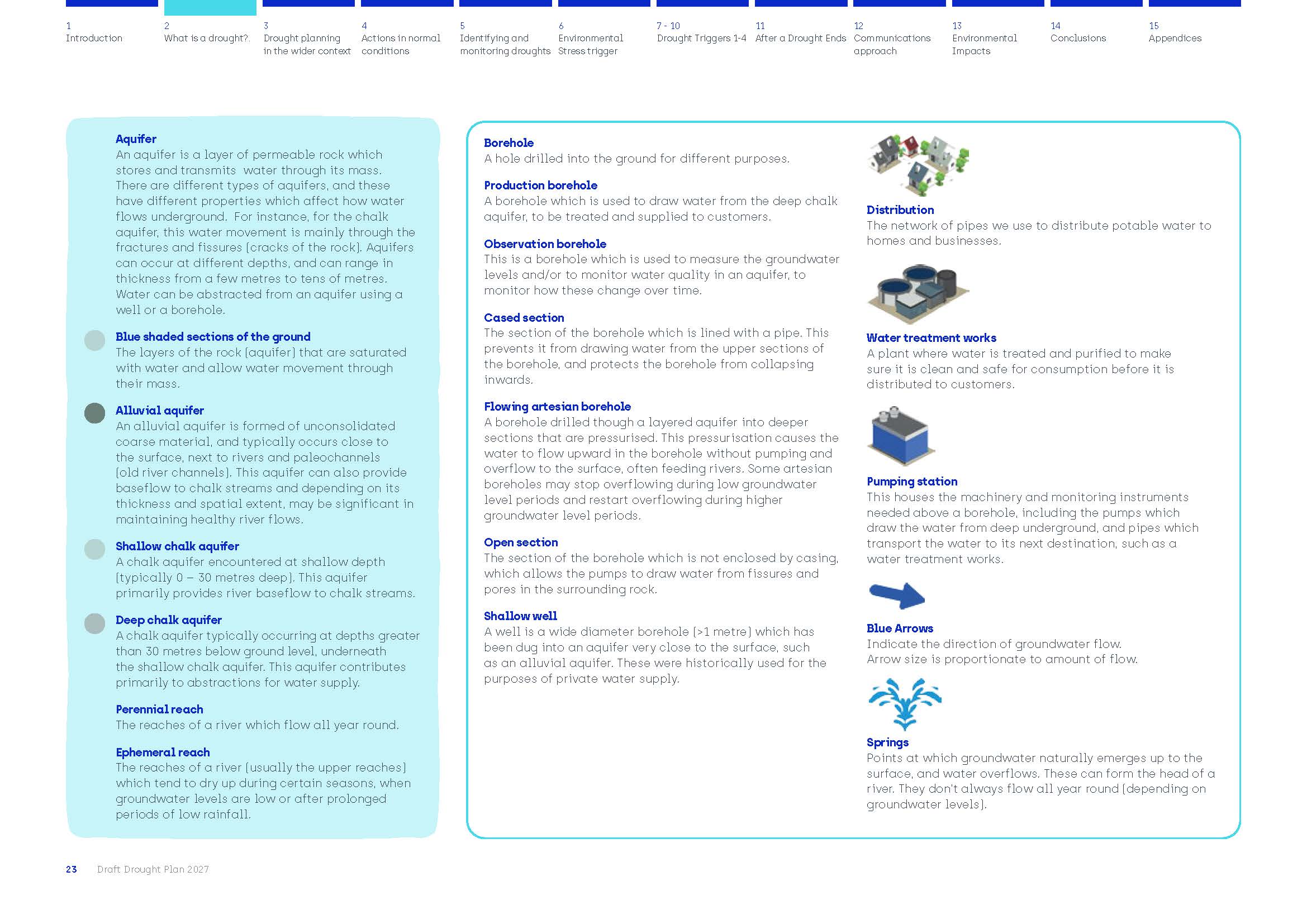
The majority of the water we supply comes from aquifers below the ground – please see the accompanying graphic which illustrates a typical groundwater system in our area.
Aquifers are a body of porous rock or sediment that can store water, known as groundwater. These are complex systems and it is important for us to understand the nature of interactions between groundwater, surface water (river flows and lake levels) and how our abstractions could affect these. In our supply area, the main aquifer is made of chalk which also helps feed our local rivers and globally rare chalk streams. When groundwater levels are high, the rivers flow along most of its length, when groundwater levels are low, some rivers will begin to dry out, particularly in the upper reaches. This is a natural process and these parts of the river are known as winterbourne or ephemeral reaches, as they do not flow all the time.
Groundwater levels are most strongly influenced by weather (particularly winter rainfall) and naturally vary with the seasons. However, our operations can also affect groundwater levels in some areas, which is why we pay close attention to the impact this has on the environment. We have an extensive environmental monitoring network and are investing significant amounts into improving habitats in local river systems through the Water Industry National Environment programme. This will help to improve the resilience of these habitats to drought events.
Groundwater systems rely on winter rainfall to replenish water resources during what is known as the recharge period (typically October to April).